Leak No Meak
Every drop finds its fortune. Tidemarks flow freely through the Meak Shallows — no real money, no pressure, just the quiet pull of the current.
Free Coins, Free FunThis site is intended for adult entertainment only (18+). It does not offer real-money gambling or an opportunity to win real money or prizes. Virtual currency has no monetary value.
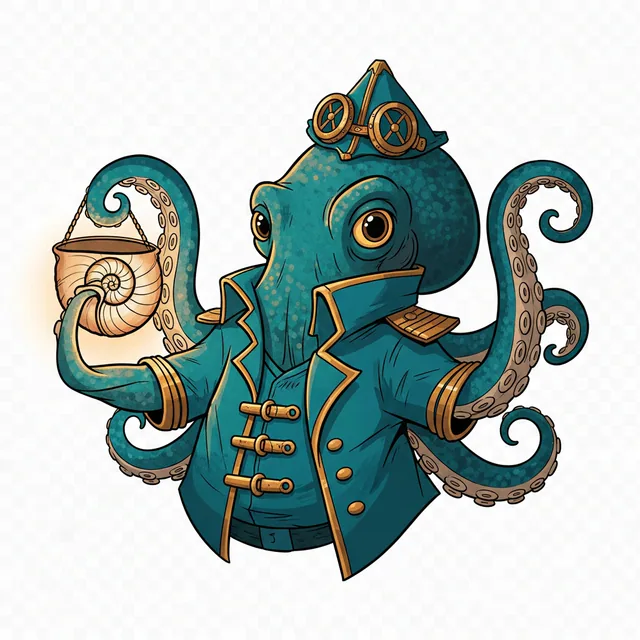
Cartographer · Navigator · Scholar of the Shallows
Nemo Drifter
Nemo Drifter once spent forty tidal cycles mapping the deepest tunnels of the Meak Shallows, compiling a chart so accurate it glowed in the dark. When the final passage was drawn, Nemo realised the map had become the territory — every Tidemark in circulation carried a faint echo of one of those inked lines. Now Nemo keeps the chart tucked inside the nautilus shell, surfacing only to guide newcomers through the first drop and the first spin. The lantern still glows, even out of water.
Patient and curious, Nemo charts every current with equal parts scholarship and sea-wandering — always nudging you toward the next cave, never in a hurry to see you gone.
Welcome to the Meak Shallows
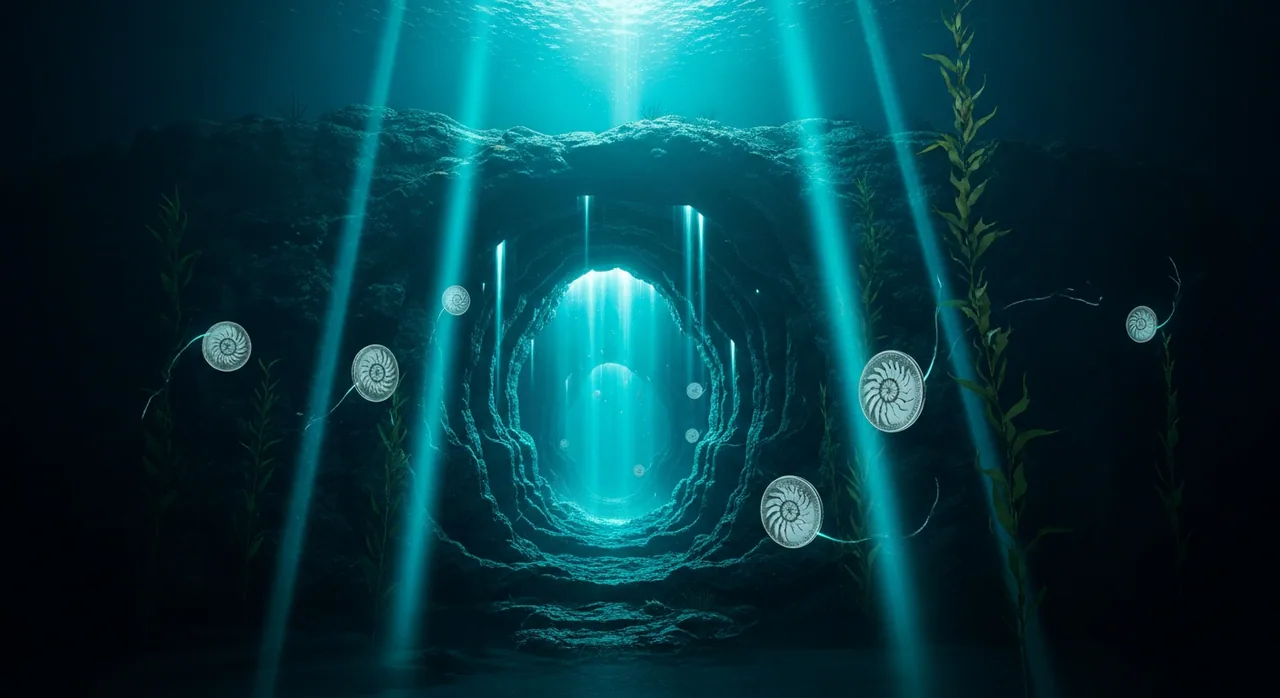
Beneath the grey-green surface of the Meak Shallows lies a labyrinth of sea-caves and tidal chambers known only to the boldest divers. Coins here are called Tidemarks — pale tokens stamped with the outline of a nautilus — and they circulate on invisible currents that no chart has ever captured.
The old mariners say that if you listen closely between waves, you can hear the caves counting. Nobody has ever proved them wrong. This is where your games live: not in a casino, but in the water. Take a breath and dive in.
Why You'll Love Us
🌊 Daily Tidemark Bonus
Return each day to claim a free pocket of Tidemarks from Nemo Drifter. No purchase, no card, no catch — just show up and spin.
🎮 Three Distinct Games
Reels, a drop board, and a spinning compass — each pulls at a different kind of anticipation. Pick your current and go.
🪙 Nothing Costs a Penny
Every coin in the Meak Shallows is virtual. There is no purchase path anywhere on this site, and there never will be.
📱 Plays on Any Device
The Shallows run in your browser — phone, tablet, or desktop. No download, no account required to try the demos.
Our Games
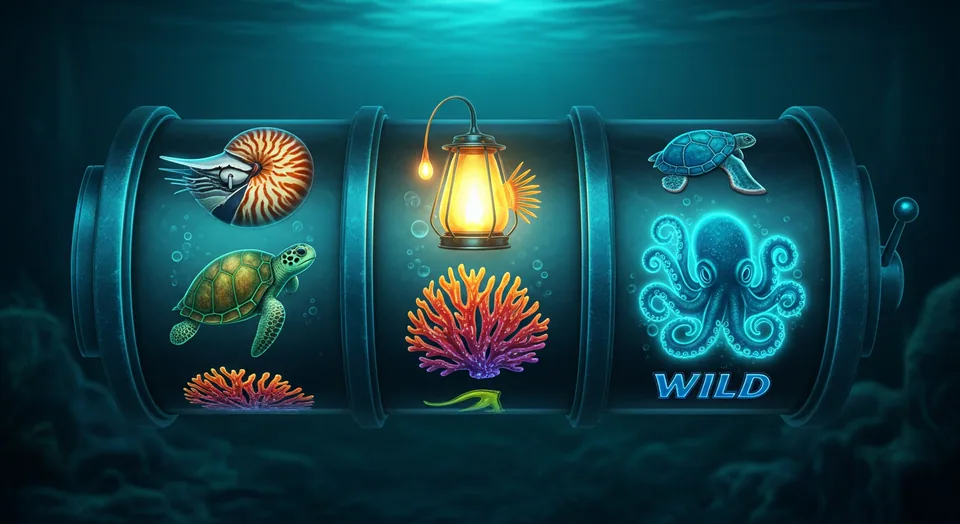
Tidal Reels
Three reels turn on an underwater current — line up the creatures of the Meak Shallows and watch your Tidemarks rise.
Rules
- Match three identical symbols in a horizontal row to win Tidemarks.
- The Octopus Wild substitutes for any other symbol on any reel.
- Three Nautilus shells in a row trigger the Tidal Bonus — your win is doubled.
- All wins are paid in virtual Tidemarks only and carry no real-money value whatsoever.
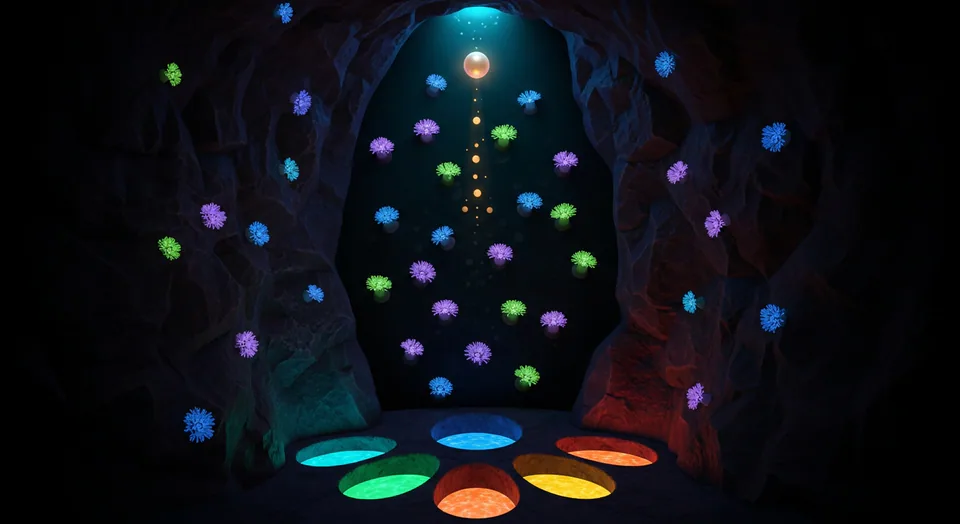
Cave Drop
Release a pearl from the mouth of the highest cave and watch it find its own way down through the peg-studded dark.
Rules
- Drop a pearl from the top of the cave and let the current steer it.
- The pearl bounces off bioluminescent pegs until it settles in one of the prize pools at the base.
- Your Tidemark reward is determined by the multiplier on the pool it lands in.
- All prizes are virtual Tidemarks with no real-money value and cannot be exchanged for anything outside this site.
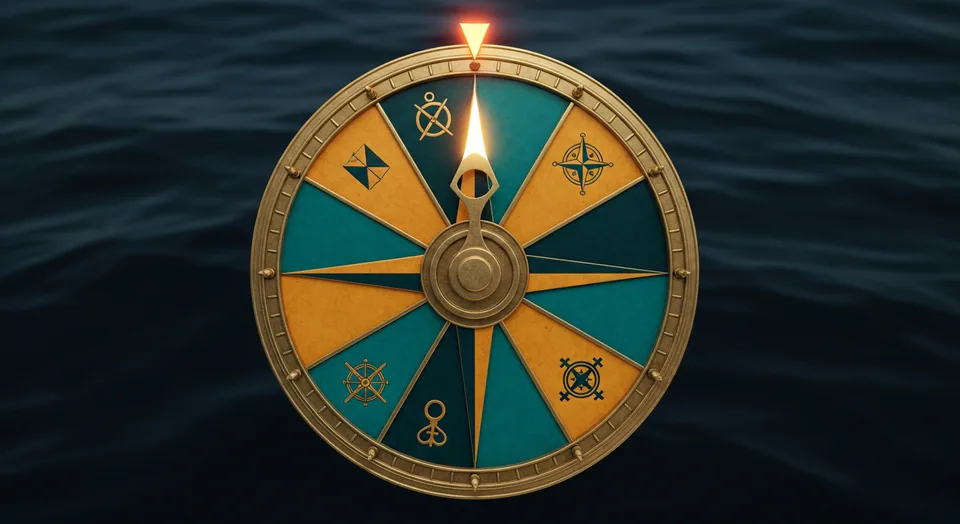
Compass Wheel
Spin the great navigator's compass — eight directions, eight fates, all in Tidemarks.
Rules
- Spin the Compass Wheel and wait for the pointer to settle on a bearing.
- Each bearing awards a different multiplier on your 12-Tidemark stake.
- A 'Dead Calm' segment returns your stake without additional reward.
- All outcomes are virtual Tidemarks with no real-money value and cannot be redeemed outside this site.
Our Story
Leak No Meak began in a shared workspace in Brighton in 2021, when a small group of ex-boardgame and indie-game designers started asking a simple question: could a browser casino feel unhurried? The first year was mostly arguments about physics engines and one very long debate about what colour teal actually is.
By 2023 we had three playable prototypes and a mascot whose hat had already gone through four redesigns. We launched publicly with a single commitment — no real-money mechanics, ever — and that commitment has not moved.
Every feature since has been built around the idea that play should leave you feeling lighter, not chased.
How Free Play Works
Starting Balance
Every visitor to the Meak Shallows is handed a fresh stash of 5,000 Tidemarks on arrival — pale nautilus-stamped tokens that circulate freely through every cave and current. No card, no sign-up, no exchange of anything real.
Zero Risk
Tidemarks are virtual tokens with no monetary value. There is no purchase path anywhere on this site — no deposits, no premium tiers, nothing that costs a penny. Whatever the reels show, your real-world wallet stays exactly where it was.
Refilling
When your Tidemarks run dry, simply ask Nemo Drifter for a refill — refresh the page and a new stash of 5,000 washes in on the next tide. There is no waiting, no penalty, and absolutely no pressure to keep playing.
Studio Team
Orla spent the first decade of her career building educational puzzle games before co-founding the studio in 2021. She believes a good game earns two minutes of your attention, not two hours of your regret.
Dimitri came from analogue game design — he still keeps a crate of unfinished board-game prototypes under his desk. He joined to bring the same tactile patience to browser-based play, where a single interaction has to count for everything.
Amara's reference folder for the Meak Shallows stretches to several hundred underwater photography prints and one very battered marine-biology atlas from 1987. Every symbol on every reel began as a pencil sketch on A5 paper.
Jakub writes the animation and physics code that makes the pearl in Cave Drop feel like it has actual weight. He is deeply particular about frame rates and rather less particular about most other things.
Priya manages every player-facing conversation and authors our Responsible Play guidelines. Her rule of thumb: if the site ever starts feeling urgent, something has gone wrong in the design, not in the player.
What Players Say
"I do the Cave Drop most lunchtimes — it takes about three minutes and it's a decent way to clear my head before afternoon calls."
"I appreciated that nothing asked me for payment details. The Tidal Reels just worked straight from the browser, no account needed."
"The Compass Wheel is satisfying in a way I can't fully explain. Not something I'd do for hours, but a nice five-minute thing."
"Good to find something casino-themed that is genuinely free. Nemo Drifter is a nice touch — my kids find the octopus funny."
Responsible Play
At Leak No Meak, our commitment runs beneath everything we build: the Meak Shallows is an 18+ environment designed for adult audiences in the United Kingdom, and we take that boundary seriously. Tidal Reels, Cave Drop, and Compass Wheel are places to pass a few quiet minutes — not to chase, not to invest, not to feel the pull of anything heavier than a pearl finding its own path down through bioluminescent dark.
No real money enters or leaves this site. Tidemarks are entirely virtual tokens — they cannot be exchanged for prizes, converted to currency, or redeemed anywhere outside this browser window. Even so, we believe the habits of mindful play matter on free-to-play sites just as they do on licensed gaming platforms. The design of every game here was shaped by that belief, and it is reviewed regularly by our Responsible Play team.
If the Shallows ever start to feel less like a pleasant drift and more like an obligation, we want you to know that professional support is close at hand — right here in the United Kingdom. Please take a look at our Responsible Play page for full guidance, self-assessment tools, and the helpline details that are always available to you.
FAQ
Is Leak No Meak really free to play?
Entirely. There is no purchase path, no premium currency tier, and no paywall anywhere on the site. All Tidemarks are virtual tokens that exist solely inside the game.
Can I win real money or prizes?
No. Tidemarks are virtual coins with no monetary value. Wins stay on-screen as a score; they cannot be redeemed, transferred, or exchanged for anything of real-world value.
Do I need an account or to download anything?
No download and no account are required to play the demos. The games run directly in your browser.
What is the minimum age to play?
You must be 18 or older to use this site. The games carry casino-style themes, and we apply the same age threshold as licensed operators even though no real money is involved.
How do I get more Tidemarks, and what is the daily bonus?
A daily Tidemark parcel from Nemo Drifter replenishes your balance each calendar day. Visit any game page and the bonus is credited automatically — no code or action required beyond returning.
Which devices and browsers are supported?
The Meak Shallows run in any modern browser — Chrome, Firefox, Safari, Edge — on desktop, tablet, and mobile. No plugins or app installs needed.
How do I contact support?
Email us at support@leaknomeak.com. We aim to reply within 24 hours on weekdays. For urgent responsible-play concerns, please use the helpline numbers listed in the Responsible Play section.
Where can I find your Privacy Policy, Terms of Use, and Cookie Policy?
All three documents are linked in the footer of every page. They are written in plain English and cover how we handle data, what cookies we set, and the rules of the games.
Where can I get help if play stops feeling fun?
Please reach out to GamCare (gamcare.org.uk), BeGambleAware (begambleaware.org), or GAMSTOP (gamstop.co.uk). The National Gambling Helpline is also available free on 0808 8020 133, around the clock.
What are Tidemarks, exactly — are they connected to the lore?
Tidemarks are the in-universe virtual currency of the Meak Shallows. They are purely fictional tokens that Nemo Drifter uses to keep score. They have no value outside this site and were invented entirely for atmosphere.